6 Types of NPC Characters (With Live 3D Examples From Real Worlds)
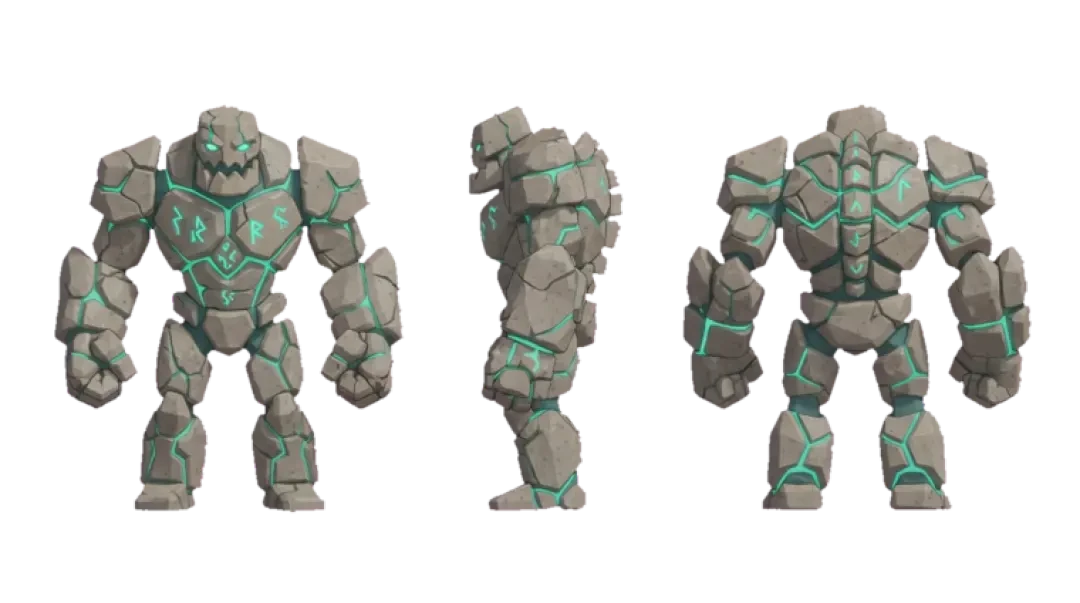
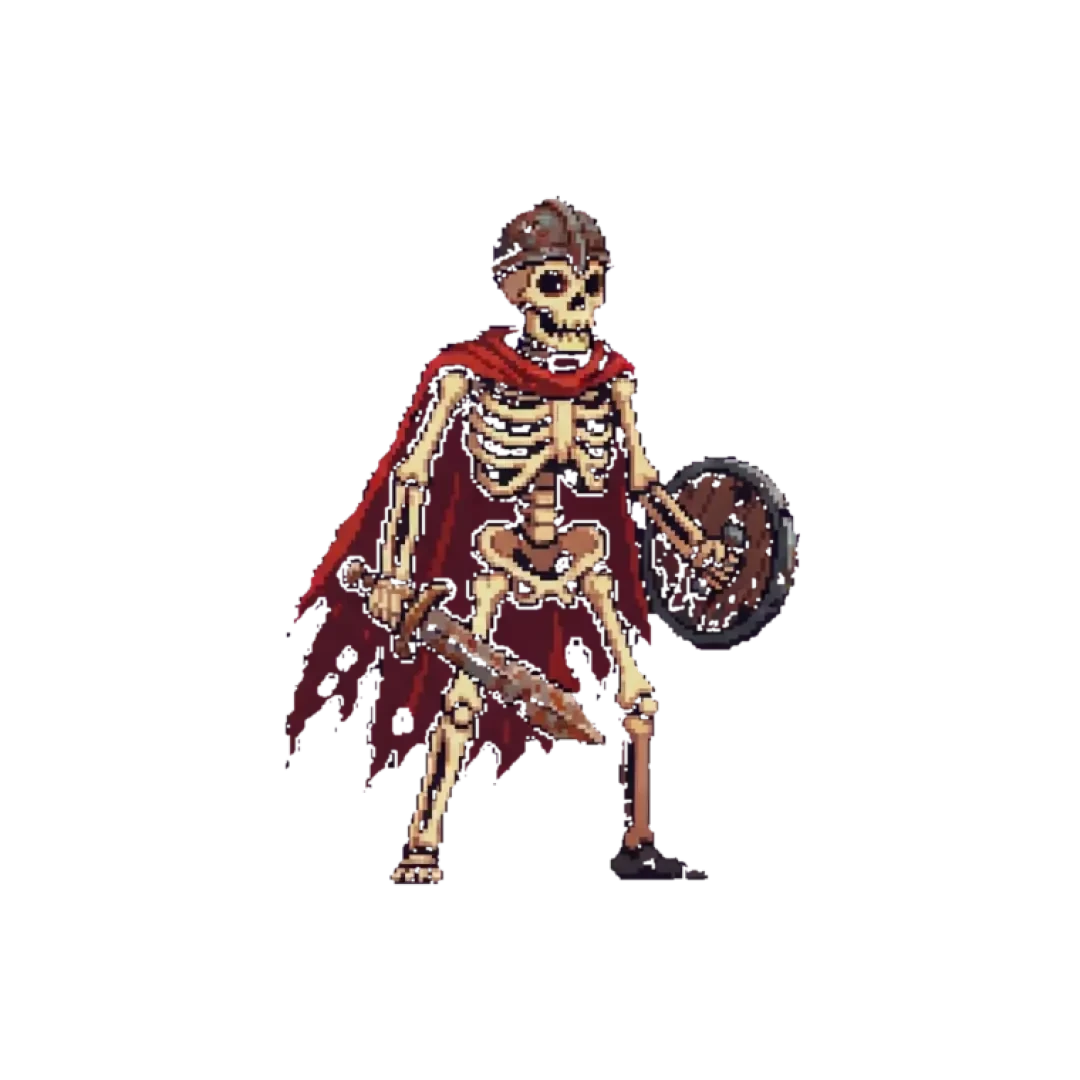

Make your own npc character types
Quest, vendor, enemy, companion, background, interactive — the six types of NPC characters, each illustrated with a real 3D world you can walk into right now.
Most npc character types that ship in a real 3D world fall into six buckets: quest, vendor, enemy, companion, background, and interactive. The bucket you pick decides which systems you have to wire up — dialogue state, inventory, pathfinding, aggro, or nothing at all — and it decides what breaks first when a player does something you did not plan for.
This page takes those six npc character types one at a time. Each one gets a definition, the mechanism that makes it work in the engine, the failure mode we see most often, and a live world from the Neta Studio 3D game builder that you can walk through instead of looking at a screenshot.
Quick Answer: The Six Types
The six types are quest NPCs, which hand out and complete objectives; vendor NPCs, which trade items for currency; enemy NPCs, which fight and persist between fights; companion NPCs, which follow the player; background NPCs, which populate a scene without interacting; and interactive NPCs, which are objects, animals, and fixtures that respond in place.
That is the whole taxonomy in one sentence. The rest of this page takes them one at a time — what each type does mechanically, what breaks first, and a world from the builder you can open and walk through.
Why the type comes before the model
Mesh, rig, and animation set are largely interchangeable between types. The same villager mesh on the same idle clip can be a quest giver, a vendor, or a background character. What differs is the component stack: a dialogue graph, an inventory table, a navmesh agent, an aggro radius, a trigger volume, or a save flag.
Pick the type first and you spend your time tuning the one system that actually needs it. Pick the model first and you build four systems you never use. Mini World is the cheapest place to compare them side by side, because all six fit in one scene without a loading screen between them.
Quest NPCs
A quest NPC owns story state. It offers an objective, knows whether that objective is complete, and gives a reward when it is. Mechanically that is a dialogue graph with at least three entry conditions — not started, active, complete — plus a reference to an objective flag that the rest of the world can set.
The failure mode is storing that flag on the NPC itself. If the NPC is destroyed, streamed out, or the world reloads, the quest resets to not started while the player is still holding the item they were told to collect. The player now has an inventory item with no owner and no turn-in. Put the flag in the player save, keyed by a stable quest ID, and have the dialogue graph read that variable when the panel opens, not when the NPC spawns.
The second thing to get right is the turn-in check. If completion only fires inside a tight volume at the NPC's feet, players who hand in from a moving vehicle or across a fence will miss it. Give the completion check a generous radius plus a line-of-sight test, and keep it separate from the interact prompt so that walking near the NPC does not auto-complete a quest the player has not read yet.
The Cyclops' Island is the shortest way to see the whole loop. There is a single giver, a short objective chain, and a reward that opens the rest of the island. Walk up, take the objective, leave, come back, and watch what happens to the dialogue entry condition when you return with the item. That three-state transition is the entire quest NPC, and once you have seen it you can rebuild it anywhere.
Vendor NPCs
A vendor NPC trades items for currency. That is the whole mechanic. Mechanically a vendor is two tables and a check: a stock list of item IDs with buy prices, a sell-price rule, and a currency comparison that runs before the transaction commits.
The economy role is larger than the transaction. Vendors are the main currency sink, which is what stops loot from accumulating into a number the player stops caring about. They are also the pacing valve: what a vendor stocks determines what the player can attempt next. When a playtester is stuck, the first thing to inspect is vendor stock, not enemy difficulty.
This is the easiest type to build. A trigger volume, an item list, and a panel. No navmesh, no aggro, no dialogue graph if you do not want one. The panel is most of the work.
It is also the easiest type to make boring. Fixed stock turns a vendor into a vending machine: the player buys once and never comes back. Two cheap fixes. First, restock — change the stock list on a timer or when a world event fires. Second, gating — hide items until the player has been somewhere or cleared something. Neither needs a new system. Keep sell price strictly below buy price, or the player has an infinite loop and the economy is over before the second area.
Enemy NPCs
An enemy NPC is a hostile actor that exists in the world whether or not the player is fighting it. It has states outside combat — idle, patrol, alert — and a transition into combat. That is the line between an enemy NPC and a plain CPU opponent.
A CPU opponent exists only inside a match. It spawns at match start, is removed at match end, and carries no state between rounds. Its behavior is bounded by the rules of the match, and the match is the whole world. An enemy NPC has to answer questions a CPU opponent is never asked: where does it go when the player leaves, does it come back after dying, does it still exist after the player saves and reloads.
Why the distinction matters for design: enemy NPC placement is level design, not match tuning. You are choosing aggro radius, patrol route, and leash distance in world coordinates, and those numbers change how the level reads. An aggro radius longer than the level's sightlines starts combat before the player can see the enemy. A leash that is too long turns one fight into a chase across the map that drags every other encounter into it. Give every enemy three per-instance numbers you can tune: aggro radius, leash distance, and time-to-disengage.
Persistence is the other half. Decide per enemy whether it respawns, and on what trigger — on world reload, on a timer, or never. If you do not decide, the default behavior is almost always never, and you have quietly deleted a chunk of the world after one playthrough. Enemy death also needs a corpse rule: either the body despawns on a timer and drops loot at that moment, or it stays and the loot table is read from the corpse. Mixing the two produces enemies you can loot twice.
Companion NPCs
A companion follows the player, participates in traversal or combat, and carries state across scenes — health, inventory, sometimes affinity. It is the only type that is on screen most of the time and doing something in most of those frames.
The pathing problem is what makes companions hard. A companion is a navmesh agent whose target is another moving agent. Doorways fail first: if the agent radius on the companion is wider than the door opening minus clearance, it refuses to path through and the player walks on alone. Narrow stairs, ladders, and moving platforms fail the same way. Three settings handle most of it. Follow offset — target a point behind the player rather than the player's exact transform — a stopping distance so the companion does not crowd the camera, and a catch-up rule.
The catch-up rule is not optional. If the companion has been out of line of sight for more than a couple of seconds and is more than a few body lengths behind, teleport it to the nearest navmesh point behind the player. Every player eventually leaves a companion stuck on geometry, and every player notices when they do. Without the teleport, the failure is not that the companion gets lost; it is that the player has to walk back for it, twice, and then stops bringing it.
That surface area is also why companions are the hardest type to ship. A companion touches everything: it pulls enemy aggro, it blocks the player's own movement, it trips pressure plates, it counts toward spawn budgets, it appears in scripted sequences that were blocked for one actor, and it stands in front of the camera during dialogue. Every other system now has to answer what the companion does here. A vendor does nothing when you walk past it. A companion does something in every scene, including the ones that were never designed for it. That is why companions get cut more often than anything else on this list.
Background NPCs
A background NPC exists to make a place read as inhabited. No dialogue, no inventory, no interaction. Usually three or four idle clips, a walk loop, and either a spline path or a small patrol radius.
You need fewer of them than you think. What counts is how many are inside the camera frustum at once, not how many exist in the level. A street reads as populated with a handful of visible characters as long as some of them are moving. The eye reads motion and silhouette, not headcount. Place a sparse set of anchors where the camera actually looks — along the main route, near the doors the player uses — and let the rest of the level stay empty.
The specific thing that makes a crowd look wrong is synchronisation. If every background NPC starts the same idle on the same frame, the scene reads as a row of mannequins. Offset each instance's clip start by a random fraction of the clip length, and give walking characters slightly different speeds so they drift apart over a long sightline. Agent Sprite Forge is the fastest way to produce the small clip set a crowd needs — a few idles and a walk — without hand-animating per character.
Cost control matters more here than anywhere else, because background NPCs are the only type you place in bulk. Keep them off the navmesh so they do not consume path queries that real agents need. Share one skeleton and one material atlas across all of them. Give them either no collision or a push-out radius that cannot block the player. And do not give one a dialogue graph in case the player talks to it — a placeholder line teaches the player that the world is thin, and they will test it.
Interactive NPCs
Interactive NPCs respond in place: buttons, levers, doors, signs, animals. They have a state and a response. They do not have a schedule, a route, or a dialogue tree.
The boundary with a prop is state. A prop plays an animation and returns to rest, or does one thing with no memory of having done it. The moment an object has a persistent state variable — locked or unlocked, on or off, fed or hungry — and behaves differently on the second interaction, it is in NPC territory and it needs the same save discipline as a quest flag. One state bit and one response is a prop. Two or more states with different responses is an NPC, even when the NPC is a door.
Animals belong in this category, not in background. An animal that flees when the player crosses a radius has an awareness input and a response, which is a small state machine. The implementation is the same one you would use for a door: an interact or awareness radius, a state variable written to the save, and an animation state machine with at least two clips.
The failure mode is prompts that fire through geometry. If the interact radius is generous and the line-of-sight test is missing, players get an interact prompt for a door on the other side of a wall. Gate the prompt on a raycast plus the radius, and gate the interaction itself on the same check rather than only on the prompt. Otherwise the prompt disappears at the wall but a queued input still opens the door.
Which Type Should You Build?
Pick by goal, not by how the character looks. The first column is what you want the player to do. The second is the type that produces it. The third is the thing that becomes expensive to change once everything else is built on top of it.
If a character is doing two jobs, build it as one character with two component sets rather than two characters standing next to each other. A vendor who also gives a quest is one interactable with two panels and one shared save reference. The cost is that both flows now have to be tested against each other — a player who finishes the quest before ever opening the shop will find the stock in a state you may not have written a case for.
If you are unsure where a character belongs, start with background and add. Adding a trigger volume and a dialogue graph turns a background NPC into a quest giver without touching the mesh. The reverse is expensive: stripping interaction out of a companion means re-testing every scene it appeared in.
| Goal | Type | First thing to get right |
|---|---|---|
| Player needs a reason to travel somewhere | Quest NPC | Quest flag in the player save, keyed by a stable quest ID |
| Player needs to convert loot into usable gear | Vendor NPC | Stock table plus a currency check that runs before the transaction commits |
| Player needs a skill or resource check | Enemy NPC | Aggro radius, leash distance, and time-to-disengage, tuned per instance |
| Player needs to survive a long route | Companion NPC | Follow offset, stopping distance, and a catch-up teleport rule |
| Scene needs to read as inhabited | Background NPC | Shared clips with randomised phase offsets, and no navmesh agent |
| World needs to react to the player in place | Interactive NPC | One persistent state variable and one trigger volume with a line-of-sight gate |
Walk into the world it belongs to
A sprite is a character with nowhere to stand. The last step is the one nobody else offers: take the sheet you just built and put it in a world someone can walk around in — a small island, a planet, a rainy street corner. Every world on this site was made from one written description and published as a page you can play.
FAQ
How many types of NPC characters are there? +
Six, as we split them: quest, vendor, enemy, companion, background, and interactive. The split is functional, not biological. It is organised by which systems the character needs — dialogue state, inventory, pathfinding, aggro, or a single state flag — so two characters with completely different models can be the same type.
Is an enemy an NPC? +
Yes, if it exists in the world outside of combat. An enemy NPC has idle, patrol, and alert states, and it persists between fights, so it needs a respawn rule and a save rule. A CPU opponent that only exists inside a match is not an NPC in this sense, because nothing about it survives the match.
Which type is easiest to build? +
Vendor. A trigger volume, an item list with prices, a currency check, and a panel. There is no navmesh, no dialogue graph, and no state to persist beyond the player's inventory and money, which you already have.
Do companion NPCs need AI? +
They need pathing and a follow rule far more than they need decision-making. The hard part is staying on the navmesh next to a moving target through doorways and stairs, plus a catch-up teleport for when they fail. Choosing what the companion attacks is the small part of the work.
What is a background NPC? +
A non-interactive character placed to make a scene read as inhabited. No dialogue, no inventory, usually no navmesh agent, and often no collision. It exists for the camera, so what matters is how many are visible at once and whether their animation loops are offset from each other.
Can one NPC be two types? +
Yes, and it usually should be — a vendor who also gives a quest is one interactable with two panels and one shared save reference. The cost is combinatorial testing: every quest state multiplied by every shop state is a case you have to check, and the ones players find first are the ones you did not write.
Back to the 3D Game Builder
All 31 finished 3D worlds, games and scenes live on one page — every one of them playable.