What Is a Non-Player Character (NPC)? Definition, Types & Live 3D Examples
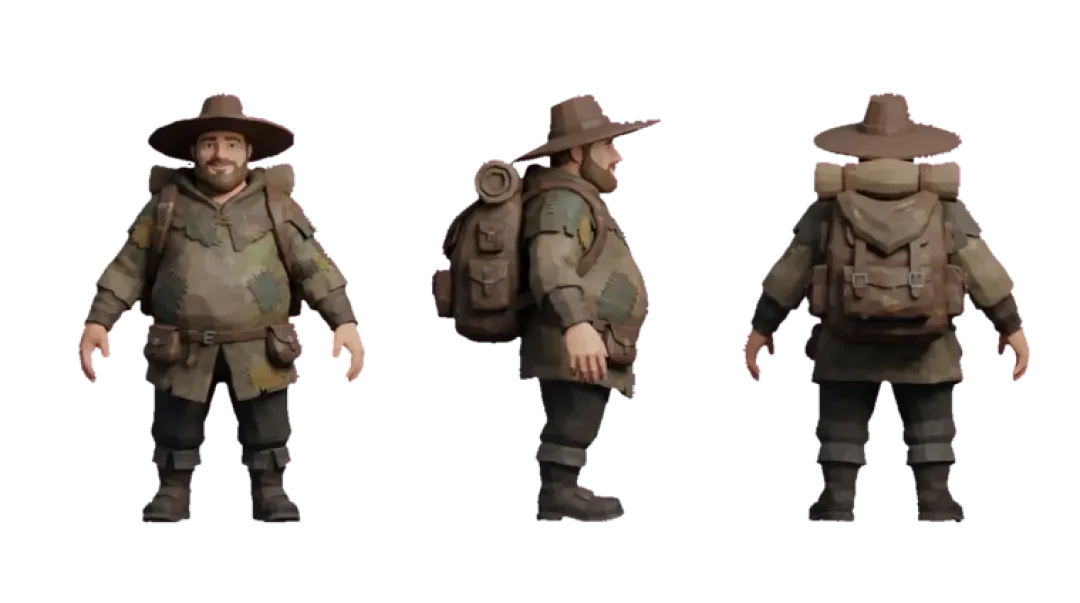
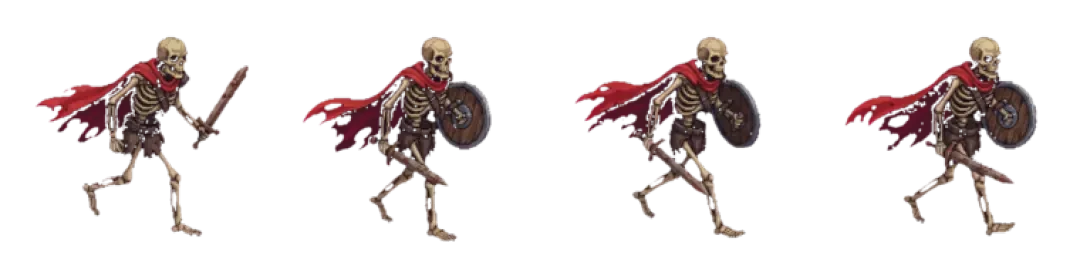
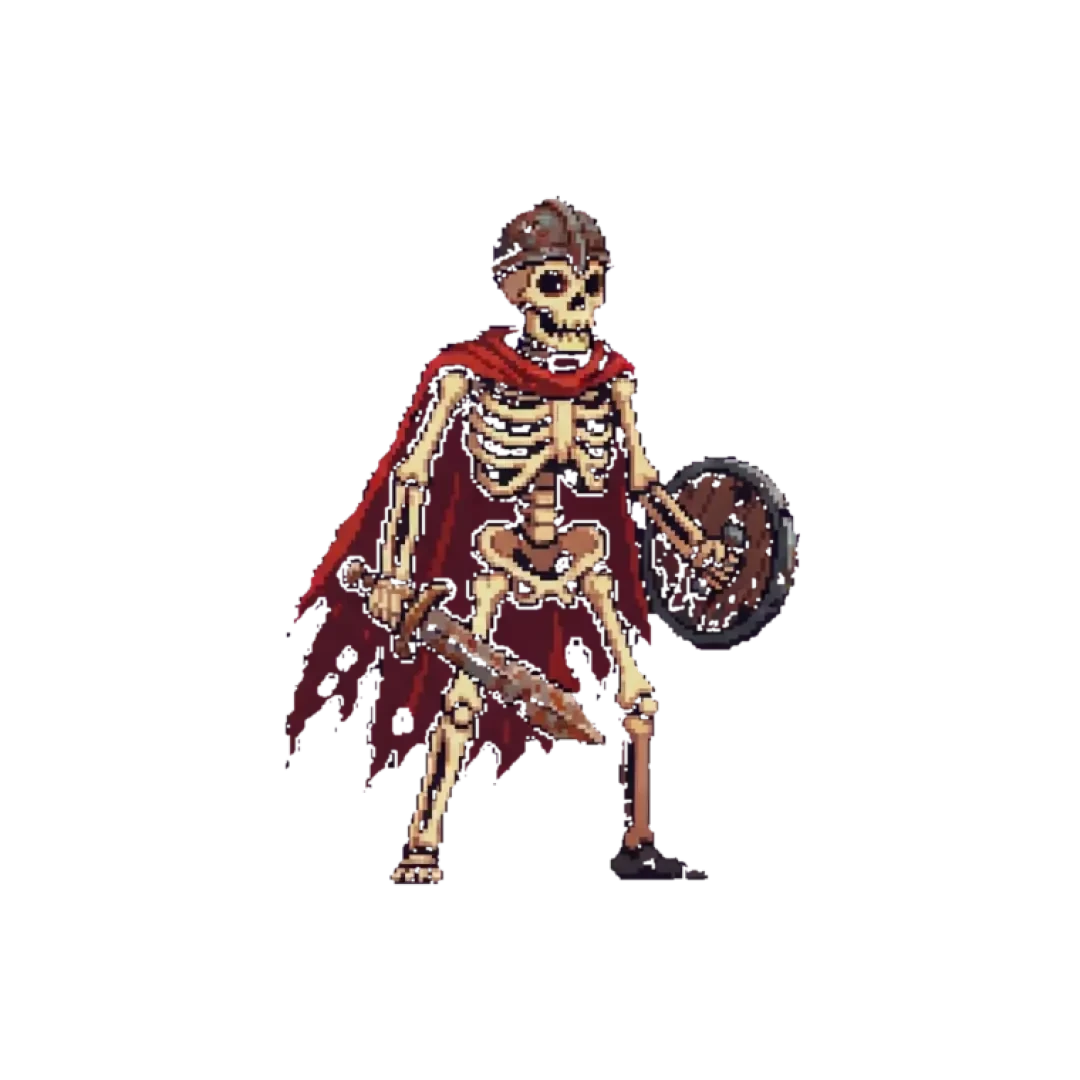
Make your own non player character
A non-player character (NPC) is any character in a game not controlled by the player. Learn the six NPC types and walk into a live 3D world where NPCs act — no download.
A non-player character (NPC) is any character in a game that is not controlled by the player. That is the whole definition. The confusion starts when people use the term for anything that moves without input — a patrolling drone with no name, a wall that slides, a bot in a deathmatch. Those are not NPCs. An NPC is a character first and an algorithm second.
The term came from tabletop role-playing. In a pen-and-paper session one person is the referee and plays every character the players do not. When that structure moved to computers, the vocabulary moved with it. In a browser 3D world built in Neta Studio, an NPC is a mesh with an attached behaviour script and a dialogue table. If you delete the script it becomes scenery. If you delete the mesh it becomes nothing. You need both.
Definition: What “Non-Player Character” Actually Means
A non-player character is a fictional person or creature inside a game world that the game controls, not the player. It has an identity — a name, a body, a voice line, a role — and it operates under rules the designer wrote. The player can usually talk to it, trade with it, fight it, or follow it. The player cannot possess it.
The phrase is older than video games. It appears in tabletop role-playing game texts from the 1970s, where it distinguished characters run by the game master from characters run by the players. The abbreviation NPC entered general game writing shortly after, and it has stayed stable for fifty years. That stability is unusual. Rendering, physics, pathfinding, and dialogue systems have all been replaced several times over. The label survived because it describes a relationship, not a technology.
Two conditions must both hold. First, the entity is a character — it has presence and identity inside the fiction. Second, control rests with the system, not the human. A traffic cone in a racing game fails the first condition. A second player in co-op fails the second. A CPU opponent in a fighting game fails the first if it has no character at all, which is why the next section separates those cases.
Working definition you can reuse
A non-player character is a character the game controls. That sentence covers everything from a shopkeeper standing behind a counter to a companion that follows you across three zones and remembers what you did.
NPC vs Player vs CPU
The three terms get mixed because they can look identical on screen. A CPU opponent and an enemy NPC may share the same model and the same attack timings. The difference is what the entity is in the design, not what it renders as. Players have agency over a character. NPCs have identity inside the fiction. CPUs are an implementation of opposition.
The distinction matters when you build. In Neta Studio, a player-controlled entity binds to input events. An NPC binds to a behaviour script and a dialogue table. A CPU opponent binds to a difficulty curve and usually nothing else — no name, no line, no memory. You can promote a CPU into an NPC by giving it a name, a voice, and a reason to be there. You can demote an NPC into a prop by stripping its dialogue. The label follows the design, not the file.
| NPC | Player | CPU |
|---|---|---|
| Has a character identity: name, model, voice, role | Has a character identity, chosen or assigned | May have no identity at all — often a mirror of the player |
| Controlled by the game's logic | Controlled by a human through input | Controlled by the game's logic |
| Can talk, trade, give quests, follow, remember | Decides what to do next | Exists to fight, race, or compete |
| May be friendly, neutral, or hostile | Alignment is the player's choice | Usually hostile by default |
| Delete the dialogue and it becomes a prop | Delete the input binding and it becomes an NPC | Add a name and a voice line and it becomes an NPC |
The 6 Types of NPCs
Most NPCs in shipped games fall into six functional buckets. A single character can belong to more than one — a blacksmith who sells gear and also hands out a quest is a Vendor and a Quest giver. The buckets are useful because each one implies a different amount of behaviour code, dialogue volume, and pathfinding.
If you are learning to build them, start with Background and Interactive. They need almost no logic and they make a scene feel populated. Add Vendors when you have an inventory system. Add Companions last, because follow behaviour is where pathfinding bugs get expensive.
- Quest NPCGives objectives, tracks completion, and changes state when the objective resolves. Needs a dialogue table with at least three states: before, during, after. You will meet one at the dock in The Cyclops' Island.
- Vendor NPCExchanges items or currency. Needs an inventory list and a trade UI hook. The hard part is pricing, not behaviour. In Mini World one vendor stocks three items and refuses to trade before a flag is set.
- Background NPCExists to make a place feel inhabited. Walks a loop, plays an idle animation, has no dialogue tree. Cheap to run, and the type most often mistaken for scenery.
- Enemy NPCHostile, with an aggro radius and an attack pattern. Distinct from a CPU opponent because it usually has a name, a faction, and a reason to be in the level.
- Companion NPCFollows the player, fights alongside them, and often has a loyalty or health state. Follow behaviour is the failure-prone part: it breaks on stairs, doorways, and narrow ledges.
- Interactive NPCResponds to a specific player action — open a gate, start a cutscene, hand over an object. No quest, no shop. It reacts to one trigger.
What Makes an NPC a Character, Not a Prop
Four ingredients do the work: appearance, dialogue, behaviour, and a role in the story. Strip any three and you have a prop. A prop that moves is still a prop. A moving crate with a name tag is still a crate.
Appearance is the cheapest ingredient and the most overrated. A detailed model with no dialogue and no role reads as decoration. Dialogue is what most players mean when they say a game has good NPCs, because it is the clearest signal that something inside the wall is choosing to speak to you. Behaviour is what makes the character persist when you walk away. Role is why you care when it comes back.
The order to build them in is appearance, then behaviour, then dialogue, then role. Appearance first because you need something to look at while you debug. Behaviour second because a character that never moves is hard to test. Dialogue third because it depends on state. Role last because it is a design decision, not a code one — and it is the ingredient that turns a vending machine into a person.
Why a moving prop still fails
Give a barrel a patrol path and it moves. Give it a name and it is labelled. It still has no dialogue, no role, and nothing to say about the world. Players read it as machinery. The tell is simple: if the player never expects it to respond, it is not a character.
The four-ingredient test
Before you call something an NPC, check all four. Appearance: can you describe it? Dialogue: can you quote a line? Behaviour: does it do anything when unobserved? Role: would the story change if you deleted it? Three out of four is a prop with ambition.
Walk Into a World Where These NPCs Live
Reading about NPCs is not the same as watching one decide to walk toward you. The 3D game builder in Neta Studio runs in the browser — no install, no plugin, no download. The world below is live and playable. Walk up to each character and interact. All six types are present.
The Cyclops' Island uses NPCs the way a small adventure game does: a handful of characters, each with one job. The quest giver at the start sets the objective. The vendor trades. The companion joins after a flag is set. The enemy patrols a fixed route with a sight cone. Background NPCs populate the village, and one interactive NPC opens a gate when you approach with the right item.
If you want to modify them, the 3D game builder exposes the behaviour script attached to each character. Agent Sprite Forge generates the character art and the sprite sheet for each NPC. You can swap the dialogue table and reload without restarting the session.
- Quest NPCStanding near the starting dock. Speak to it and the objective marker updates on your HUD.
- Vendor NPCBehind the stall on the west path. Trades three items; the third unlocks after the quest flag flips.
- Background NPCTwo walking a fixed loop through the village. They have no dialogue and will not stop.
- Enemy NPCPatrolling the ridge. It has a sight cone and an aggro radius. Break line of sight to reset it.
- Companion NPCJoins after the quest flag is set. Follows at two metres and attacks what you attack.
- Interactive NPCAt the gate. Approach with the correct item and it opens the gate; approach without it and it refuses.
Why the Term Still Matters
The vocabulary survives because it marks a boundary that every new technology has to cross. Tabletop games drew the line between the referee's characters and the players'. Early text adventures kept it. Three-A budgets kept it while spending enormous amounts on motion capture and voice work for characters the player still cannot possess. LLM-driven characters keep it too — a language model that improvises dialogue is still a non-player character, because the player is still not the one speaking.
What changes is the cost of each ingredient. Appearance used to be the expensive one; now it is close to free for a stylised character. Dialogue used to be a fixed table; now it can be generated at runtime. Behaviour used to be a hand-authored state machine; now it is often a tree or a planner. Role remains the hardest and the most human — the decision about why a character exists in the story at all.
The term matters for building because it forces the question. If you cannot say who controls an entity, you cannot say what it is for. In Neta Studio, every character in a scene carries a control tag: player, NPC, or prop. The tag determines what binds to it. Change the tag and the behaviour changes with it.
What Counts as an NPC in Modern Games
Modern games blur the buckets. Summons, pets, AI teammates, and multiplayer bots all sit near the line. The useful question is not whether the entity is technically an NPC but whether it behaves like a character — identity, dialogue, behaviour, role — and whether the player controls it directly.
Two edge cases come up often. An AI teammate that follows orders has a character and responds to commands, but control is shared. A multiplayer bot filling an empty slot has no character at all — it is a stand-in for a human. Both get called NPCs in casual conversation. Neither fits the definition cleanly.
| Case | Verdict | Why |
|---|---|---|
| Summoned creature | NPC | Has identity and behaviour, player does not possess it |
| Pet that follows commands | NPC | Character with identity; player issues orders, does not control directly |
| AI teammate in a squad | Usually NPC | Has identity and role; shared tactical control makes it ambiguous |
| Multiplayer bot filling a slot | Not an NPC | Stands in for a human player; usually no character or dialogue |
| Fighting-game CPU opponent | Not an NPC | Pure opposition algorithm with no role in a story |
| Tutorial voice giving instructions | NPC if embodied | If it has no body or name, it is UI, not a character |
Walk into the world it belongs to
A sprite is a character with nowhere to stand. The last step is the one nobody else offers: take the sheet you just built and put it in a world someone can walk around in — a small island, a planet, a rainy street corner. Every world on this site was made from one written description and published as a page you can play.
FAQ
What is the full form of NPC? +
Non-player character. The abbreviation has been in use since tabletop role-playing games in the 1970s and has not changed meaning.
Are NPCs AI? +
Sometimes. A background NPC walking a fixed loop is scripted, not AI. A companion that pathfinds around obstacles and reacts to combat uses search and decision logic. The label 'AI' describes the implementation, not the character.
What is the difference between an NPC and a bot? +
A bot stands in for a human player and usually has no character identity. An NPC is a character inside the fiction, controlled by the game. A multiplayer bot filling an empty slot is not an NPC.
What was the first NPC? +
There is no verifiable single first. Text adventures in the 1970s had characters that responded to typed commands, and the term itself came from tabletop play before that.
Why is it called 'non-player'? +
Because the label defines the entity by what it is not: it is not controlled by the player. The negative framing marks the boundary of player agency.
Can you play as an NPC? +
Not in the same session. If you control the character, it is a player character by definition. Some games let you possess an NPC temporarily, but during that window the game treats it as player-controlled.
Back to the 3D Game Builder
All 31 finished 3D worlds, games and scenes live on one page — every one of them playable.