
Merch Maker: One Character, One Merch Sheet

A merch maker that ends at the print file: a consistent character, a 16-panel sticker sheet, poster and emblem art — plus what to check before printing.

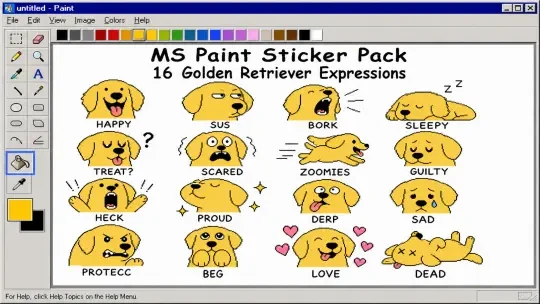
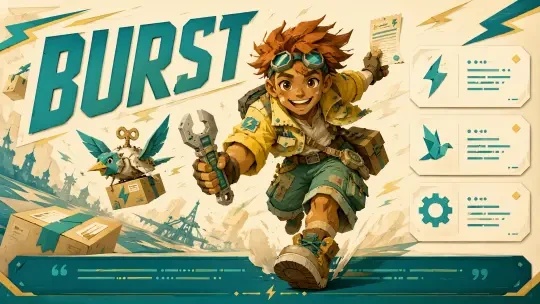
What a merch maker should give you
Most “merch makers” online are storefronts wearing a design tool: you upload art, pick a shirt, and the platform prints and ships it. That is a fulfilment business, and the design half is usually a crop box. The other kind — the one this page is about — stops earlier and does the part that is actually hard: producing a consistent character across a whole sheet of products, in a file that a printer can use.
On Neta Studio the output is a set of artworks tied to one world: a sixteen-panel sticker sheet built by the sticker-pack skill, poster templates that carry a type code and a traits chart as well as art, faction emblems drawn to survive being printed small, and in-world posters that advertise something that does not exist. What you do with the files is your business, including taking them to a print-on-demand service.
| Source | Neta Studio’s own output formats: sticker-pack sheets, poster templates, emblems |
| What you get | Artwork and sheets — PNG/JPG files, one character kept consistent across panels |
| What you do not get | Printing, shipping, fulfilment, inventory or a storefront |
| Licensing | Your own characters: yes. Licensed series: no — do not print and sell those |
| Print prep | 300 dpi at final size, CMYK proof, ~3 mm bleed, real alpha for die-cuts |
Start with the character, not the product
One character, one visual anchor, one mood range. The sticker-pack skill lays out sixteen panels with the same face and palette; the poster and emblem skills reuse that art direction instead of starting over.
The four-file kit
A merch run that looks deliberate rather than assembled needs four kinds of artwork, and each one is a different drawing problem.
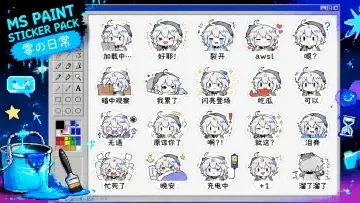
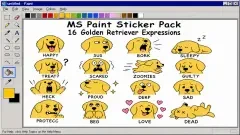
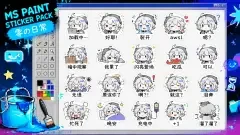
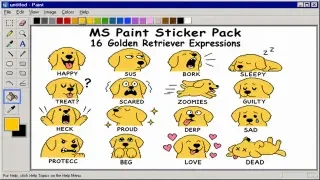
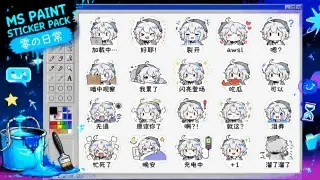
- The sticker sheet — Sixteen panels, one character, sixteen expressions and poses, one palette. It is the fastest way to prove consistency: if panel nine has a different face, the sheet is wrong and so is everything printed from it.
- The poster — Art plus information. The strongest version on this site is the personality poster — an archetype portrait, a four-letter type code and a readable traits chart on one sheet — because it gives a buyer something to read after they have looked.
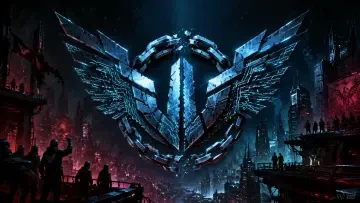
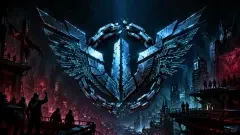
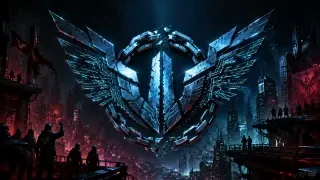
- The emblem — A mark that survives at 20 mm. Fewer shapes, higher contrast, no gradients that turn to mud on fabric. This is the piece that makes a set look like a brand instead of a folder.
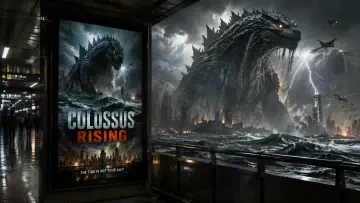
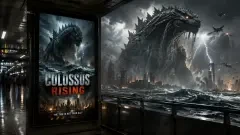
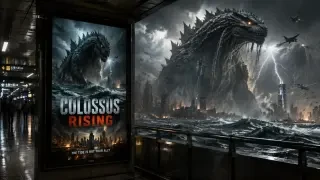
- The in-world poster — An advertisement for something inside your story: a movie, a festival, a missing-person notice. It sells a world by pretending to be part of it, and it is the most shareable object in the kit.
What “print-ready” actually asks for. A merch maker that ends with a JPEG is a wallpaper generator. The file a printer wants is a different object, and the difference is four specifications: resolution, colour space, bleed and transparency. None of them are glamorous, and all of them are the reason a first run comes back wrong.
Resolution. 300 pixels per inch at final size is the working standard for anything viewed at arm’s length. A 2,000-pixel image is fine for a 5 cm sticker and unusable for an A2 poster, and upscaling does not add detail — it adds interpolation. Colour. Screens are RGB and additive; most fabric and paper printing is CMYK and subtractive, which is why a saturated neon that looks great on a phone prints as a duller, slightly greener thing. Design in RGB if you like, but check the CMYK proof before a run. Bleed. Art should extend roughly 3 mm past the trim line on every side, so a 1 mm cutting error does not leave a white sliver. Transparency. Die-cut stickers need a real alpha channel, not a white background pretending to be one.
Two more decisions are specific to merch. The first is the unit: print one, wear it, wash it, then order the run — every material assumption you have is wrong until you have held the thing. The second is the mark: an emblem that reads at 20 mm is a different drawing from one that reads at 200 mm, and most first attempts are drawn at the wrong one.
What this does not do. Neta Studio is not a print shop and not a fulfilment service. There is no manufacturer behind this page, no shipping, no inventory and no storefront — the output is artwork and a sheet, and the rest of the chain is yours. That distinction is worth stating loudly, because “merch maker” is a term that usually implies a shop that will handle the printing, and anyone who assumes that will be disappointed at the end of the flow rather than the start.
It also does not license anything. A character you generate is yours to print within the platform’s terms; a character from a series you like is not, and putting a recognisable licensed design on a shirt you sell is a legal problem regardless of which tool drew it. The safe version of fan merch is a design that references a world without reproducing its marks: a faction emblem, an in-world poster, a silhouette that a fan recognises and a lawyer does not. That is a narrower brief, and it is also a more interesting one.
Why consistency beats variety
The failure mode of homemade merch is a folder of unrelated images: a portrait in one style, a logo in another, a sticker that looks like a different character. Buyers do not analyse it, they feel it — a table at a convention reads as either a brand or a pile. The fix is structural rather than artistic: generate the whole kit from one world and one art direction, so the palette, the line and the character are decided once. That is the actual value of doing this inside a world builder instead of a design app, and it is the reason the sheet and the poster should be made in the same session, from the same sentence.


Merch-shaped work, already printed
Neta Studio pieces that are themselves merch formats — a sheet, a poster, a mark — so you can see the output before you make one.
Sheets and marks
MS Paint Sticker Pack — 16 Expressions is the sixteen-panel format at its most legible, and MS Paint Sticker Pack — Zero proves the loop holds when the subject comes from an existing world. Faction Emblem — Abyss Freedom Alliance is the small-scale test: a mark that still reads when it is 20 mm wide.
Posters that carry information
SBTI Poster — The Spark Runner puts a type code and a traits chart on the same sheet as the art, which is the version people keep. Station Movie Poster — Colossus Rising is the in-world poster — an advertisement for a film that only exists inside the story.
Three runs you can prepare tonight
The one-unit test
Pick the smallest product in your plan — a 50 mm sticker, a single patch — and make that file first. If the character reads at that size, the rest of the run will hold. If it does not, you have saved a large order.
The palette lock
Choose 12 to 16 colours and use only those across the sheet, the poster and the emblem. The fastest way to make a set look professional is not better drawing, it is a smaller palette applied without exception.
The proof
Order one printed unit in the material you actually plan to sell, then look at it under indoor light. Screen colours lie, and the first physical proof is the only honest review you will get.
The cast, briefly

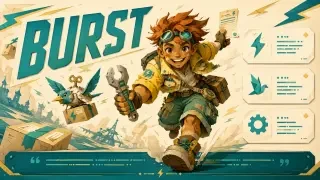
The art is the product. The shop is yours.
Neta Studio makes the sheet, the poster and the mark; printing and fulfilment stay with you or your print-on-demand service. That split is deliberate — it keeps the cost of a first run honest.
Built with two skills
poster-press lays out the poster and the sheet with the art, the type and the margins already in position; sticker-pack draws the sixteen panels from one anchor so the face and palette do not drift. When the set is done you can give the character a story in the roleplay hub. Everything about printing here is general print practice, not a service offered on this site.
Merch maker FAQ
Does Neta Studio print and ship merch?
No. There is no print shop, fulfilment, inventory or storefront behind this page. You get artwork and sheets; printing and shipping are handled by you or a print-on-demand service.
What does the sticker sheet actually contain?
Sixteen panels of the same character in different expressions, gestures and poses, in one consistent palette and style, saved as a work with its own page. It is a sheet, not sixteen separate transparent files.
What file settings should I ask the printer for?
300 dpi at final size, a CMYK proof, about 3 mm of bleed on every side, and a real alpha channel for die-cut stickers. Ask for their template before you scale anything.
Can I sell merch of a licensed series?
Not safely. A recognisable licensed character or logo on a product you sell is a legal problem regardless of which tool drew it. Original characters and world-reference designs are the safe ground.
How many products should I start with?
One. Print a single unit in the material you plan to sell, then decide. The material assumptions people make before holding the object are almost always wrong.
Is this page official?
This is a Neta Studio page about its own tools. Both illustrations are original work made for this page; no brand or licensed design is reproduced.
Keep reading
Platform: Neta Studio · Type: Tool · Merch sheet · Hub: neta.art/use-cases/en/sticker-maker · Works: MS Paint Sticker Pack — 16 Expressions · SBTI Poster — The Spark Runner · MS Paint Sticker Pack — Zero · Faction Emblem — Abyss Freedom Alliance · Station Movie Poster — Colossus Rising