What Are NPCs? The Complete Guide to Non-Player Characters in Gaming

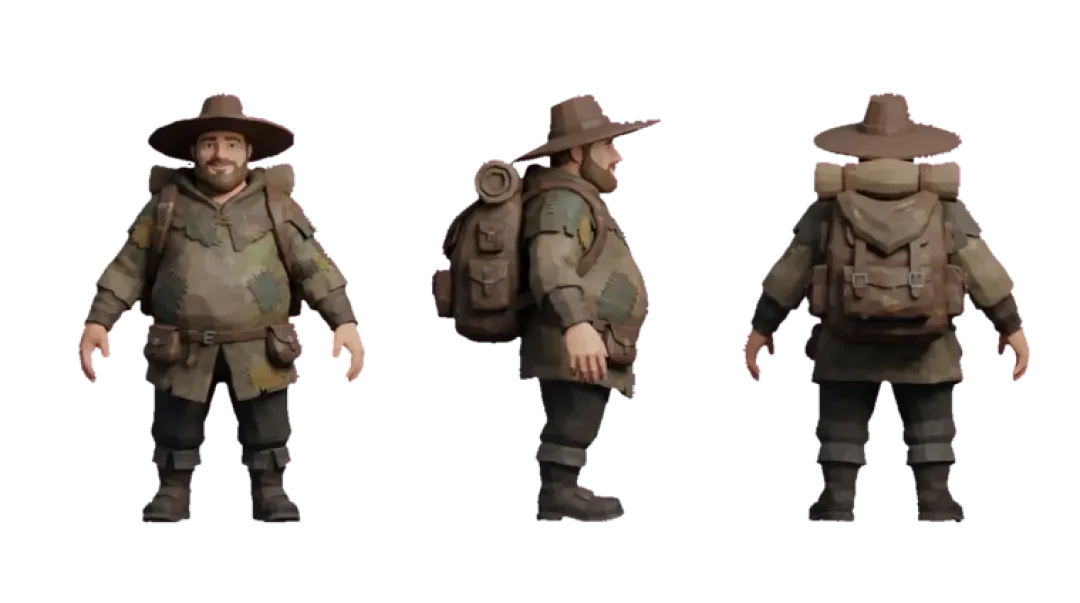
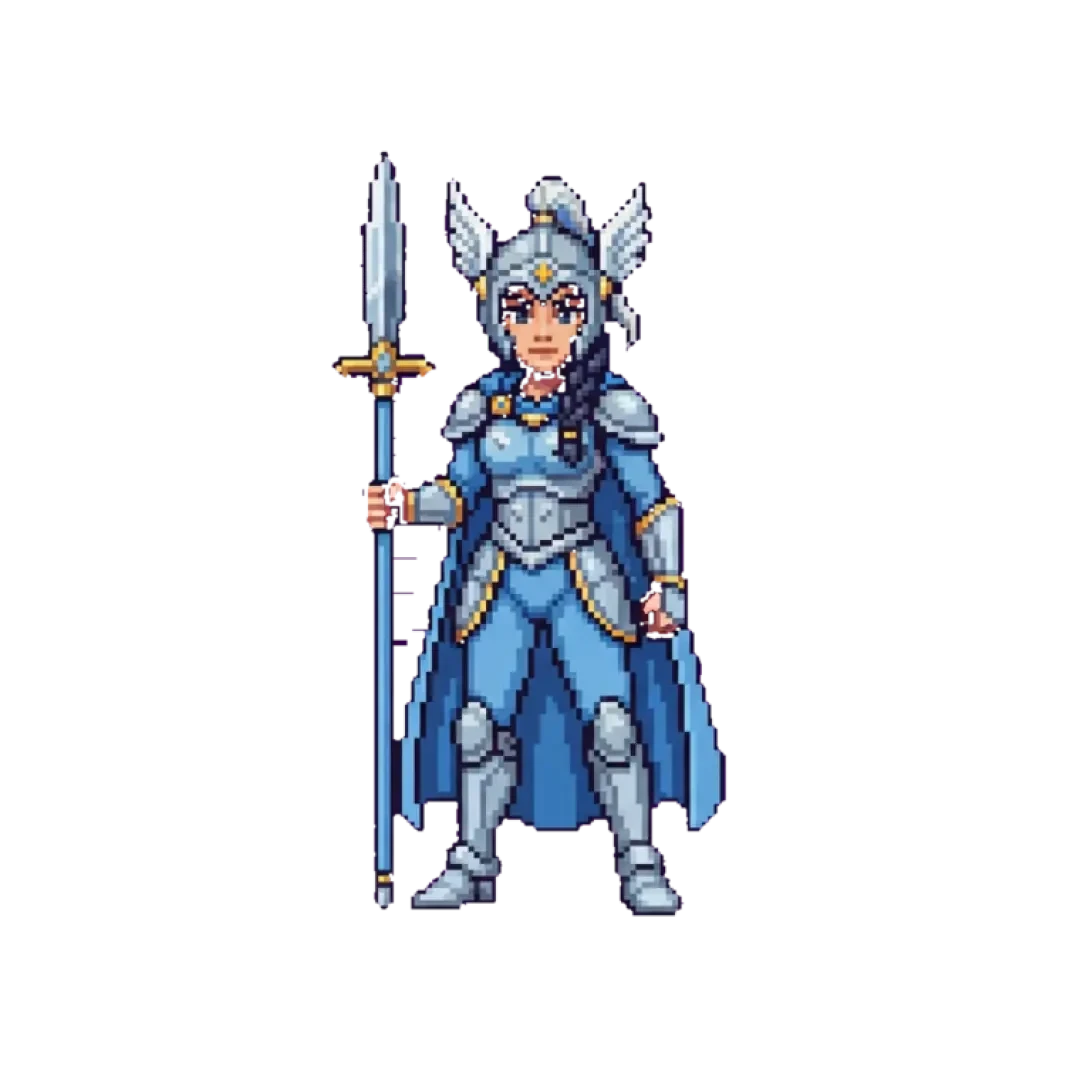
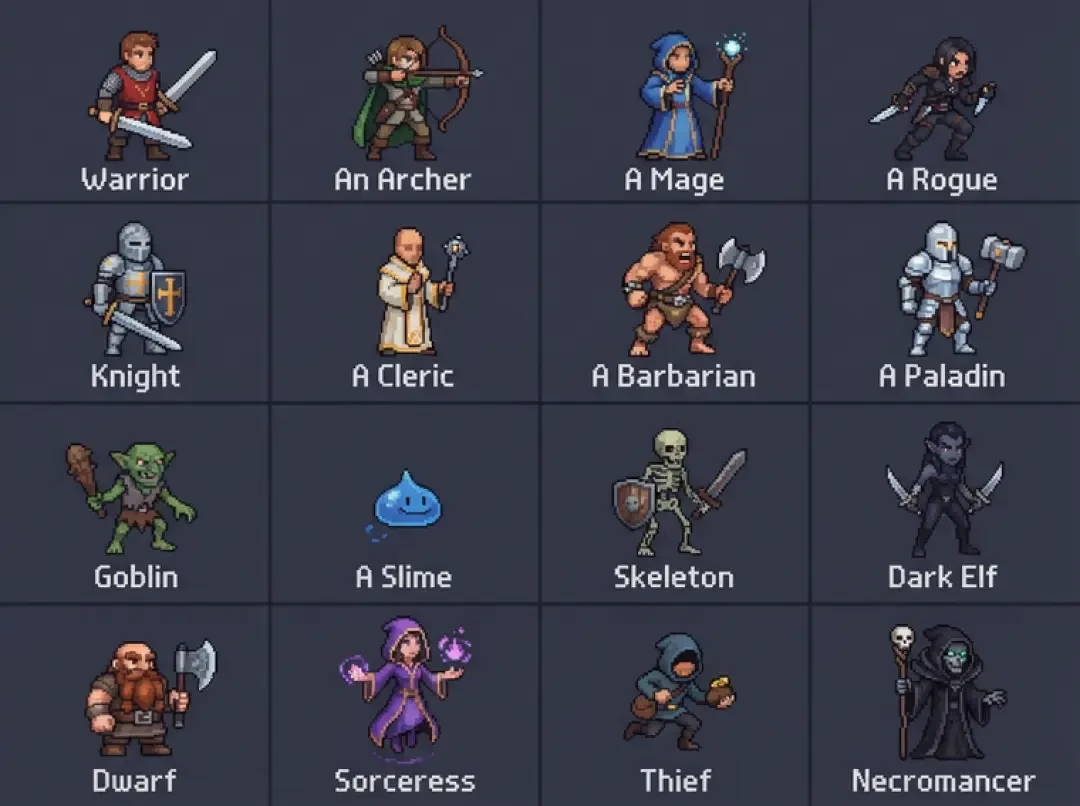
Make your own npc's
An NPC (“npc's”) is a non-player character — any game character the player doesn't control. See every NPC type, how they behave, and play one live in your browser.
An NPC — a non-player character — is any character in a game that the player does not directly control. That includes the shopkeeper who never moves, the guard who walks a fixed patrol, the boss with a scripted attack pattern, and the ally who follows you through a level. The moment you write the word as "npc's", you are usually asking a grammar question, not a design question, so this guide answers both: what NPCs are, how they behave, and how to actually place one in a world you can open in a browser.
The term is older than most advice about it. It comes from tabletop role-playing, where one person runs every character except the players'. Every digital NPC inherits that job description: they exist to give the player something to react to. In Neta Studio's 3D game builder, an NPC is a character entity with a state machine, a navmesh, and a dialogue or behavior table attached — the same primitives you would use in any engine, minus the compile step.
Quick Answer: What Does “NPC” Stand For?
NPC stands for non-player character: a character in a game controlled by the game's logic rather than by a human player. NPCs cover every role that is not you — merchants, quest givers, enemies, allies, crowds, and bosses.
The plural is NPCs, with no apostrophe. The possessive singular is NPC's, as in "the NPC's patrol route." The possessive plural is NPCs', as in "the NPCs' schedules." The bare form NPC's also appears constantly in search queries and casual writing, which is why the spelling section below exists.
Is It “NPC”, “NPCs” or “NPC's”?
Three forms get confused because the apostrophe is doing two different jobs in English. Plurals of acronyms never take an apostrophe. Possessives always do. If you are unsure, expand the phrase: "the route of the NPC" becomes "the NPC's route," and "the routes of the NPCs" becomes "the NPCs' routes."
In search queries, "npc's" is common because voice input and autocomplete do not care about grammar, so people type it when they mean the plural. If you are writing documentation or a game design doc, use NPCs for the plural. Save the apostrophe for ownership and for contractions you should not use here anyway.
| Form | Use | Example |
|---|---|---|
| NPC | Singular noun. One character. | The NPC waits at the north gate. |
| NPCs | Plural noun. More than one character. No apostrophe. | Twelve NPCs populate the market square. |
| NPC's | Possessive singular, or a contraction of "NPC is." Never a plural. | The NPC's dialogue tree has three branches. |
| NPCs' | Possessive plural. Belongs to several characters. | The NPCs' schedules overlap at noon. |
NPCs in Games: Every Meaning You'll Run Into
People search for NPCs using five phrasings that all point at the same concept but arrive from different directions. Below is what each one usually means, and the scene in a Neta Studio world where you can see it working.
npc gaming
The broad category term. It means the whole practice of designing, scripting, and balancing non-player characters. In Mini World, the crowd around the central plaza is the simplest version: twenty characters with one shared idle-and-wander behavior, running on a single behavior table. They do not think; they occupy space credibly.
game npc
A single character inside a specific game. This phrasing usually precedes a question about one named character — how they behave, why they glitch, whether you can recruit them. In The Cyclops' Island, the Cyclops is one game NPC with three states: patrol, notice, and charge. He transitions on a line-of-sight check with a 900-unit cone and a two-second dwell timer before he commits.
npc games
Games where NPCs are the point, not the scenery. Simulation and life-sim genres live here. In Mini World, you can open the NPC panel, add a character, and set a schedule that moves them from home to work to a third location across a simulated day — the same structure a town simulation uses, at a smaller scale.
npc in games
The scholarly phrasing, used in essays and design discussion. It asks what function NPCs serve in the medium rather than how one specific character behaves. The honest answer: they deliver information, gate progress, and provide the social texture that makes a space read as inhabited rather than constructed.
npc in-game
The modifier form, usually attached to something else — an in-game NPC shop, an in-game NPC companion. It signals that the character lives inside the running world rather than in a menu. This is the distinction that matters for builders: an NPC on a list is data, and an NPC in-game is a navmesh agent with a collider and a tick.
A 60-Second History
Tabletop role-playing games introduced the phrase in the 1970s: one referee runs every character except the players'. Text adventures in the late 1970s gave those characters a parser — you typed at them, and a handful of words triggered a response.
MUDs in the 1980s added persistence. NPCs kept state between sessions, held inventories, and reacted to other NPCs. The 3D era added a body: a mesh, a walk cycle, a navmesh, and a collision capsule. Behavior barely changed; representation changed completely.
The last decade is the AI layer. Utility scoring, behavior trees, and most recently language models. The models change how NPCs talk. They do not change the hard part, which is deciding what the NPC should want at any given second.
NPCs in Gaming Today
Players now expect three things from a character that claims to be alive. First, a schedule: the NPC should be somewhere specific at a specific time, and that somewhere should make sense. Second, a reaction: it should notice the player and change behavior. Third, and least often delivered, memory: it should remember that a previous interaction happened.
Schedules and reactions are solved problems. A waypoint list plus a time-of-day query gets you a believable town. A line-of-sight cone plus a state transition gets you a believable guard. Both run cheaply; a hundred scheduled NPCs on a browser canvas is not a rendering problem, it is a pathfinding-budget problem.
Memory is where the gap between shipped systems and marketing language is widest. Persistent memory requires a store, a retrieval policy, and a way to age out stale facts. Without aging, the NPC accumulates contradictions. If a storefront claims every character remembers everything, look for the plan for contradiction, or assume it is a prompt wrapper with no persistence layer.
- ScheduleTime-of-day routing. The NPC walks to a named location at a named hour. Cheap and highly legible to players.
- ReactionA state transition triggered by proximity, line of sight, or a stat threshold. Patrol, notice, engage, return.
- MemoryA stored fact about the player, with a rule for when it expires. Rare in shipped games, common in marketing copy.
Play a World With Real NPCs
This world runs in the browser with no install. Open it, then walk toward the central plaza and stop inside the Cyclops' notice cone. Watch the transition: two seconds of dwell, then the charge. Walk out of the cone before the dwell completes and he returns to patrol. That is a behavior table, not a cutscene.
Then press the edit button on the world. Open the NPC panel and select any character in the plaza. You will see the same three fields that drive everything: a location list, a line-of-sight radius, and a transition table. Drag the dwell time from two seconds to four and the encounter becomes trivial to escape.
When you have changed one value and re-run the world, you have authored an NPC. The next step is Agent Sprite Forge, which turns a written character description into a sprite sheet you can attach to an entity. From there you can place a second NPC and give the two of them overlapping schedules.
01
Open the world and walk into the Cyclops' line-of-sight cone.
02
Stand still for two seconds and observe the patrol-to-charge transition.
03
Exit the cone before the dwell timer completes and watch the return state.
04
Open the NPC panel and select a plaza character.
05
Edit the line-of-sight radius or dwell time and re-run the world.
06
Attach a new sprite from Agent Sprite Forge and place a second NPC.
Why NPCs Make a World Feel Inhabited
A street with NPCs reads as a place. A street without them reads as a level. The geometry is identical in both cases; the difference is that something in the scene has a reason to be there that does not involve the player.
This is why crowd NPCs with no gameplay function still matter. The merchant who never sells you anything and the pedestrian who never speaks both tell the player that the world continues when they look away. In Mini World, the plaza crowd has no quest, no dialogue, and one behavior table, and it does more for the scene's credibility than any single scripted encounter.
The practical design rule: place one NPC whose schedule visibly conflicts with yours. Someone leaving as you arrive. That single overlap does more for the sense of a living place than doubling the crowd count.
Walk into the world it belongs to
A sprite is a character with nowhere to stand. The last step is the one nobody else offers: take the sheet you just built and put it in a world someone can walk around in — a small island, a planet, a rainy street corner. Every world on this site was made from one written description and published as a page you can play.
FAQ
What does NPC stand for? +
Non-player character — any character in a game not controlled by a human player. The term originates in tabletop role-playing, where one person runs every character except the players'.
What is an NPC in gaming? +
In gaming, an NPC is any character the game's logic controls: merchants, quest givers, guards, enemies, allies, and crowd characters. The player interacts with them but does not drive them.
Is it “NPCs” or “NPC's”? +
NPCs is the plural with no apostrophe. NPC's is the possessive singular (the NPC's route) or a contraction of "NPC is." NPCs' is the possessive plural. The apostrophe is never used to form a plural.
Are NPCs always enemies? +
No. Most NPCs in most games are neutral or friendly. Enemy characters are NPCs too, but the category is defined by who controls the character, not by hostility.
Do NPCs use AI? +
Some do. Behavior trees, utility scoring, and A* pathfinding are all AI techniques. Large language models are a newer layer, usually applied to dialogue rather than to movement or combat.
Can I make an NPC in a browser? +
Yes. In Neta Studio's 3D game builder you add an entity, attach a behavior table and a navmesh, and set a schedule or line-of-sight radius. Agent Sprite Forge turns a written character description into a sprite sheet you can attach to that entity.
What is the difference between an NPC and a mob? +
A mob is a specific kind of NPC — usually a hostile, generic, non-named character that exists to be fought and respawns. All mobs are NPCs; not all NPCs are mobs.
Why do NPCs matter in world design? +
They signal that a space has a reason to exist beyond the player. A street with scheduled characters reads as a place; the same street without them reads as a level.
How many NPCs can one world handle? +
The limit is pathfinding cost, not rendering. A hundred characters sharing one behavior table and a waypoint graph run fine; a hundred individually path-negotiating navmesh agents will not.
What makes an NPC feel alive? +
Three things, in order of cost: a schedule that puts them somewhere specific at a specific time, a reaction that changes their behavior when the player appears, and memory of a past interaction. Schedules and reactions are cheap and reliable; memory is expensive and rarely shipped.
Back to the 3D Game Builder
All 31 finished 3D worlds, games and scenes live on one page — every one of them playable.